← Back to home

Complex decisions • revision surgery

Complex cases, revision & second opinion

When previous surgery has not produced the expected result — or when an important treatment decision remains uncertain — the priority is to understand the problem precisely before proposing further surgery.

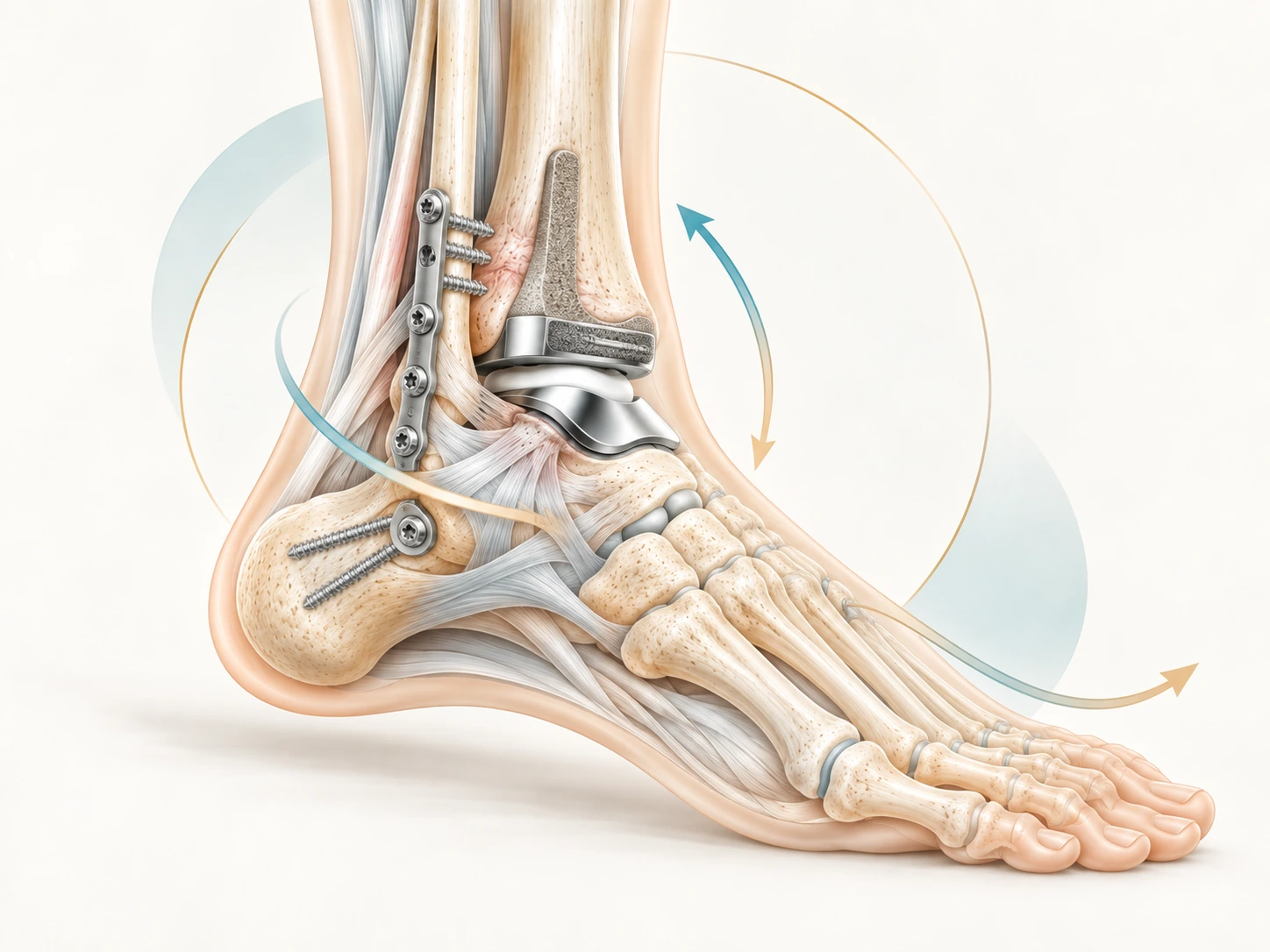
Illustrative diagram – Complex cases, revision & second opinion
Illustration

Visualising the procedure

This illustration supports complex and revision cases, where careful analysis of bone, implants and soft tissues helps guide treatment.

Your situation

Three situations, one method

I have been offered major surgery

You want to understand alternatives, expected benefits, trade-offs and whether the indication fits your goals.

→ Second opinion

I still have pain after surgery

Persistent pain does not automatically mean more surgery is required. Its cause should be identified, distinguishing mechanical, biological, neurological and other problems.

→ Failure analysis

My case is complex

Multiplanar deformity, post-traumatic sequelae, bone loss, nonunion, multiple previous operations or implant problems may require an individualised strategy.

→ Reconstruction / revision
Assessment

Before reoperating: why was the expected result not achieved?

Revision surgery begins with a diagnostic investigation. The problem visible on an X-ray is not always the only cause of symptoms.

01 — Initial diagnosis

What was the original condition and which symptoms persist today?

02 — Alignment & biomechanics

Is there residual deformity, recurrence or overload of an adjacent joint?

03 — Union & bone

Has an osteotomy or fusion united? What bone quality and stock remain?

04 — Infection

Infection may sometimes need to be investigated even without obvious inflammatory signs, particularly in selected nonunions.

05 — Hardware / implant

Position, stability, wear, loosening, impingement and bone loss are assessed according to implant type.

06 — Patient & goals

General health, smoking, neuropathy, soft-tissue quality, activity level and goals influence strategy.

Why this step matters

Revision surgery is generally more complex than the initial procedure. For example, a recent study of presumed aseptic foot and ankle nonunions found an unsuspected low-grade infection in 22% of revised cases. This figure does not apply to every patient, but illustrates why rigorous analysis of the cause matters.

Revision

An individualised reconstruction, not a standard operation

If further surgery is indicated, its purpose is to correct the identified cause while accounting for the consequences of previous surgery.

Alignment correction
Fusion / nonunion revision
Bone reconstruction
Ankle replacement revision
Ligament / tendon reconstruction
Staged strategy when required
An important limitationRevision surgery cannot guarantee restoration of anatomy or function 'as before'. In some cases, the realistic goal is to reduce pain, achieve a plantigrade stable foot, preserve the limb or improve everyday function sufficiently.
FAQ

Frequently asked questions

Does a second opinion mean I need to change surgeon?

No. It may simply confirm a strategy, offer an alternative or clarify trade-offs. You may then continue care with your original surgeon.

Does pain after surgery mean the operation failed?

Not necessarily. Recovery can be prolonged and several causes can explain persistent symptoms. Timing, examination and imaging need to be considered together.

Is revision ankle replacement always possible?

No. Options depend on the cause of failure, possible infection, available bone stock, alignment and soft tissues. Depending on the situation, options may include implant revision or conversion to fusion.

Selected medical sources

  1. Mills A, Fortin PT. Revision of the Failed Ankle Fusion. Instr Course Lect. 2019.
  2. Jennison T et al. The outcomes of revision surgery for a failed ankle arthroplasty: a systematic review and meta-analysis. Bone Jt Open. 2022.
  3. Steggink EM et al. Unsuspected low-grade infection in revision surgery for nonunion in foot and ankle arthrodesis. Bone Jt Open. 2025.
  4. Greene H et al. Nonunion in Foot and Ankle Arthrodesis Surgery: Review of Risk Factors, Identification of High-risk Patients, and a Guide to Perioperative Testing and Optimization. J Am Acad Orthop Surg. 2025.
  5. Cardoso DV, Veljkovic A. General Considerations About Foot and Ankle Arthrodesis. Any Way to Improve Our Results? Foot Ankle Clin. 2022.

Helping you move forward, step by step.

A consultation is an opportunity to discuss your situation, goals and the different treatment options.

Specialist assessment

Understand before deciding

A second opinion or revision assessment first aims to establish a precise diagnosis and realistic goals. Further surgery is proposed only when it provides a coherent response to the identified problem.