When should surgery be considered?
Surgery can be discussed when pain or instability persists despite non-operative care, when there is a significant tear, or when a tendon repeatedly dislocates or subluxes.
Tear • rupture • instability
The peroneal tendons contribute to lateral stability of the foot and ankle. Surgery is tailored to the lesion: tear, rupture, degeneration or instability behind the outer ankle bone.
The choice of procedure depends on the diagnosis, alignment, tissue quality, activity level and the patient’s goals. Recovery protocols are individualised.
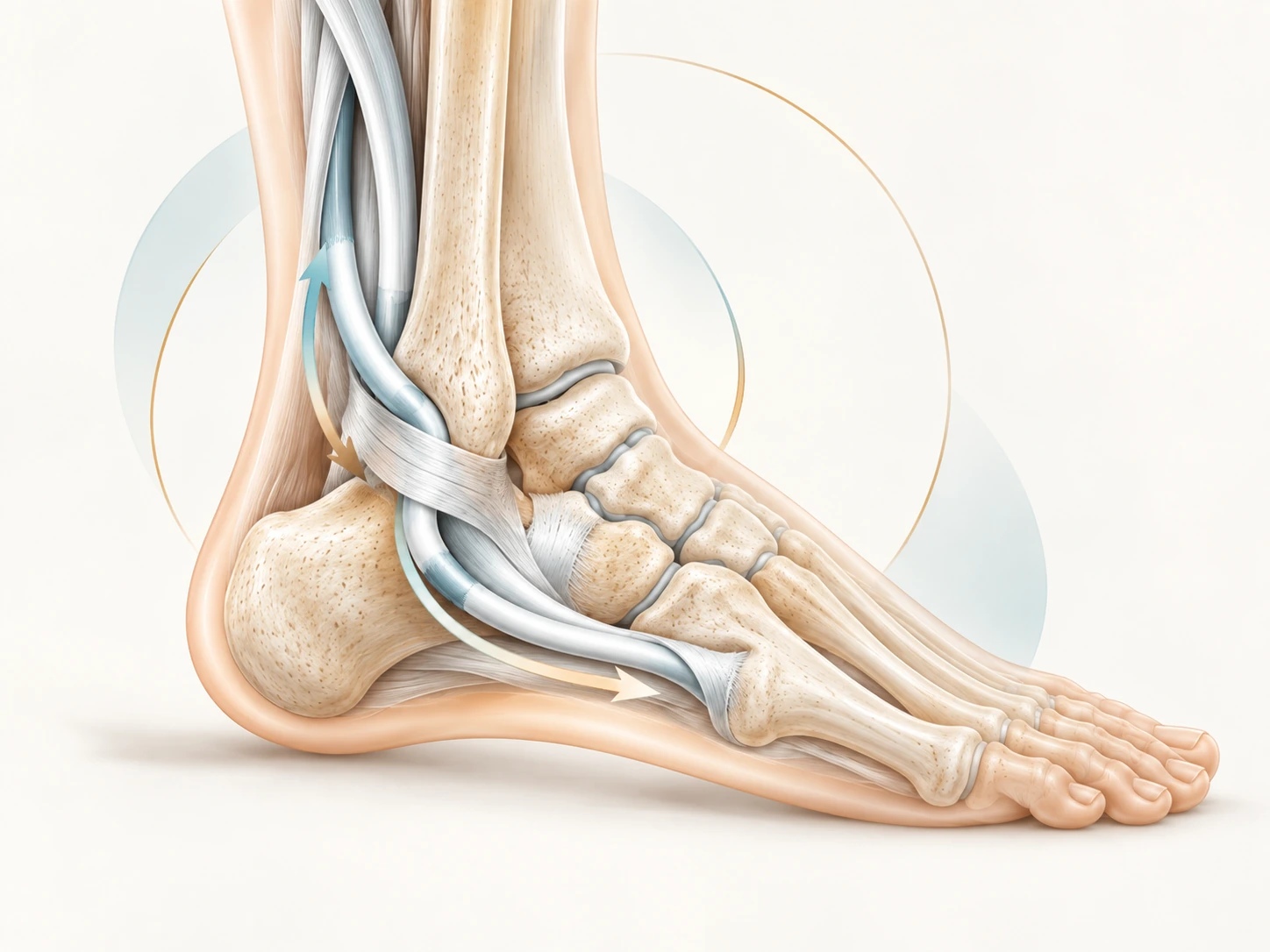
This illustration highlights the peroneal tendons and the procedures used when there is tearing, irritation or instability.
Surgery can be discussed when pain or instability persists despite non-operative care, when there is a significant tear, or when a tendon repeatedly dislocates or subluxes.
Depending on the lesion, treatment may include debridement of degenerated tissue, tendon repair, retinacular stabilisation, deepening of the fibular groove or reconstruction/tenodesis when the tendon is severely damaged.
Ligament instability or abnormal foot alignment can contribute to peroneal tendon disorders. When relevant, these factors should be addressed at the same time to reduce recurrence risk.
The duration of protection and restricted weight-bearing depends on the repair; several weeks are common. Rehabilitation then progressively restores motion, strength and lateral ankle control.
Risks include infection, wound-healing problems, irritation or injury of the sural nerve, stiffness, persistent pain or recurrent tendon injury.
Source patient : AOFAS / FootCareMD. General information, to be adapted to each clinical situation.
Helping you move forward, step by step.
A consultation is an opportunity to discuss your situation, goals and the different treatment options.